How to quit porn, gradually
You cannot switch off a habit you built over years with one decision. If you want to stop watching porn for good, you quit the same way you built it: gradually. Reduce how often you watch, then stretch the gap between, until the gap becomes your new normal.
The method, in 5 steps
- Measure your real baseline. You cannot change what you have not counted.
- Reduce the frequency first. Cap it below your baseline, on a set schedule.
- Stretch the gap. Chase 2 clean days, then 7, then 30, then 60.
- Rewire the loop and cut access. Swap the routine, add friction.
- Use slips as data. A slip resets one interval, not the journey.
Most quit-porn advice sells a clean break: delete everything tonight, grit your teeth, never look back. For a habit you have run for years, that usually buys a few heroic days followed by a heavy relapse. The behaviour is wired in through thousands of repetitions, and raw willpower does not outlast it.
So treat it as what it is: a habit to retrain, not a switch to flip. You built it gradually, by repetition, and you unwind it the same way, by doing it less and less often until "not at all" is simply the next interval rather than a cliff edge. The whole plan rests on two moves: reduce the frequency, then stretch the gap.
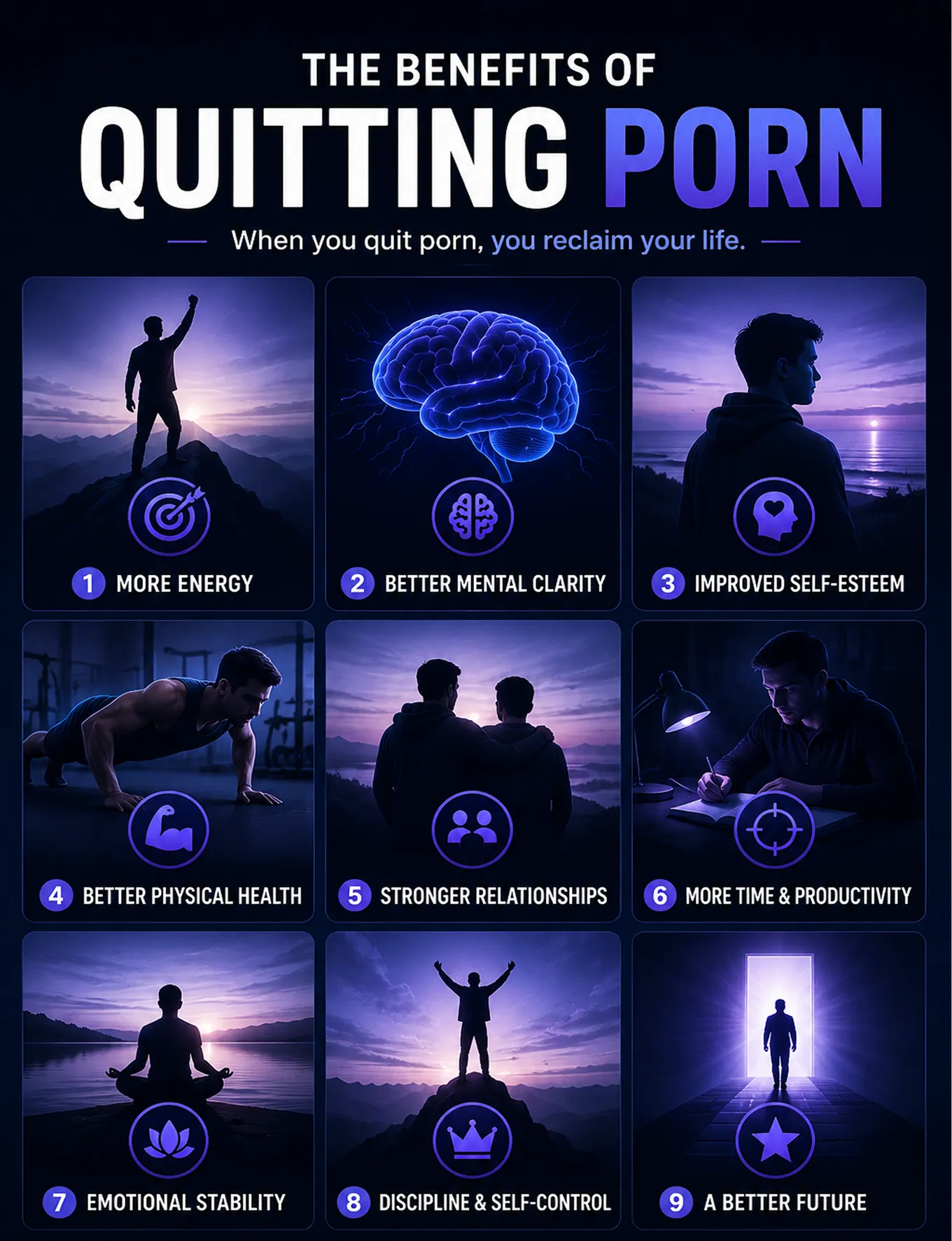
A note on cold turkey: some people do quit in one clean break, and if that genuinely works for you, take it. But for most people with a long-standing habit, a planned, gradual reduction is the version they actually finish. Choose the approach you will still be following in a month.
Step 1. Measure your real baseline
Before you cut anything, get an honest baseline. For about a week, keep watching as normal but log each time: the day, the hour, and the mood right before it. No judgement, this is data collection, not a confession.
Two patterns will jump out. First, your real frequency, which is almost always different from the rough number in your head. Second, your triggers: the handful of states, usually stress, boredom, loneliness, tiredness or late-night scrolling, that reliably come right before. Both numbers are the raw material for everything that follows.
Track these for a week:
- How many times, and on which days.
- The time of day it usually happens.
- The feeling or situation right before it.
Step 2. Reduce the frequency first
Do not jump to zero. Take your baseline and set a cap a clear step below it: if it is daily, move to every other day; if it is several times a day, bring it down to once. The goal of this stage is not to stop, it is to prove to yourself that the frequency is something you control, not something that controls you.
The key is to put it on a schedule rather than leaving it to "whenever the urge hits". When you decide in advance which days are allowed, the behaviour stops being an automatic answer to a trigger. This is the same mechanism behind scheduled-reduction programs in smoking research: the schedule, not the craving, decides the timing, which slowly pulls the habit apart from its cues.
Hold each level until it feels comfortable, usually a week or two, before you cut again. Steady and repeatable beats fast and fragile.
Bring the frequency down:
- Set a cap one clear step below your baseline.
- Decide the allowed days in advance, and stick to the schedule.
- Hold each level for a week or two before reducing again.
Step 3. Stretch the gap

Once the frequency is down and steady, flip the focus from "how often" to "how long between". This is where the habit actually breaks. Instead of aiming at the impossible-feeling "forever", you chase one clean interval at a time and make each one a little longer than the last.
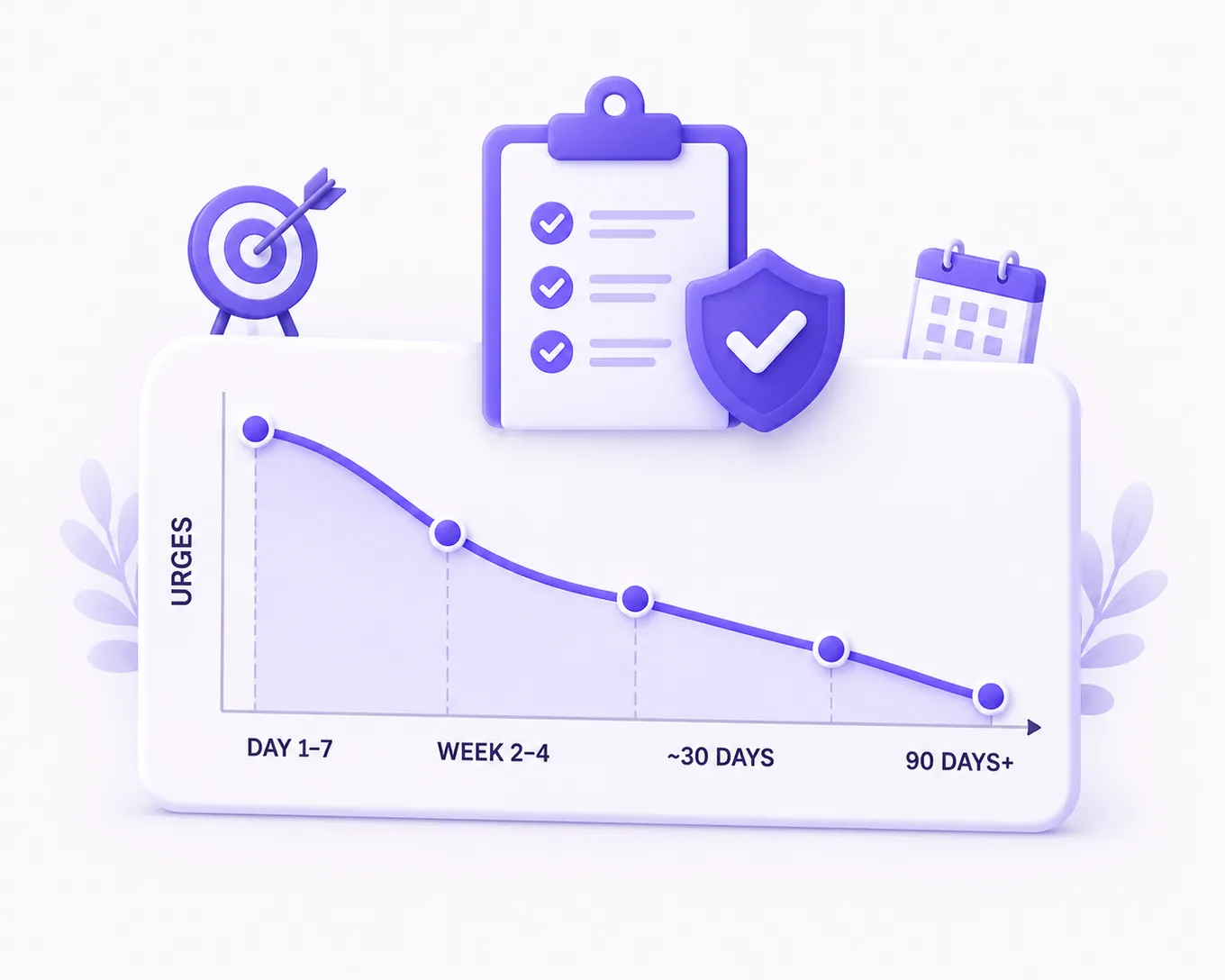
A ladder that works for most people: 2 clean days, then 7, then 14, then 30, then 60, then 90 and beyond. The only target that matters is the next rung. Two days feels doable when "never again" does not, and every rung you clear makes the next one easier, because the urges that fire in a gap get weaker the longer the gap runs.
Expect the early rungs to be the hardest. The urge to break a 2 day or 7 day gap is loud; by the time you are stretching from 30 to 60, it is usually a faint background noise.
Climb the gap ladder:
- Pick the next interval only: 2, then 7, then 14, then 30, then 60 days.
- Treat each rung as a finish line with a clear date.
- When you clear one, set the next one slightly longer.
Step 4. Rewire the loop and cut access
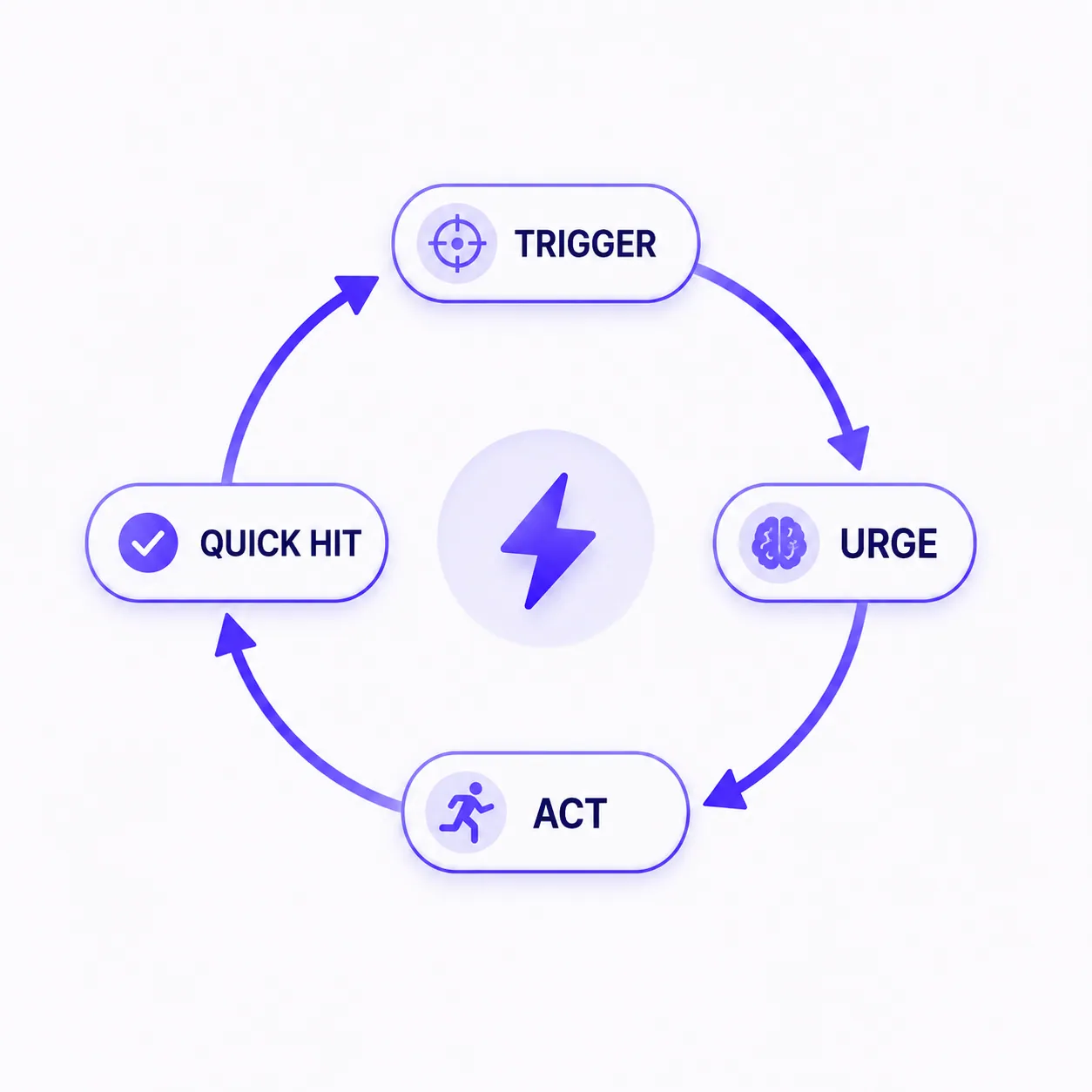
Every habit runs on a loop: a cue triggers a routine that delivers a reward. You will not delete the cues, stress and boredom are part of life, so the move is to keep the cue and the reward and change the routine in between. Decide, in advance, what you will do the moment a known trigger fires: a short walk, exercise, a cold shower, a message to a friend, a specific task. Make it ready before the urge, because nobody invents a good replacement mid-craving.

Then cut the access. A blocker is not the whole answer, but it removes the instant, private access that powers most relapses, and that friction is exactly what protects a growing gap. Appcognito blocks over 750,000 adult sites on-device across every app and browser, and you can hand the passcode to a trusted person so it cannot be undone on impulse. Tighten the access each time you reach a longer rung, so your environment keeps pace with your progress.
Make the habit harder to run:
- Pre-plan one 10-minute replacement for each top trigger.
- Block access on every device, not just one browser.
- Let someone hold the code, and tighten it as your gap grows.
Step 5. Use slips as data, and lock it in
You will slip, especially on the early rungs, and that is built into the plan. A slip resets the interval you were on, nothing more. The people who recover fastest treat a lapse as feedback: they ask what cue set it off, where the gap in the plan opened, and what one thing they will change, then restart that same day. The damage is never the slip itself, it is the "I have ruined it, may as well binge" spiral that turns one moment into a lost month.
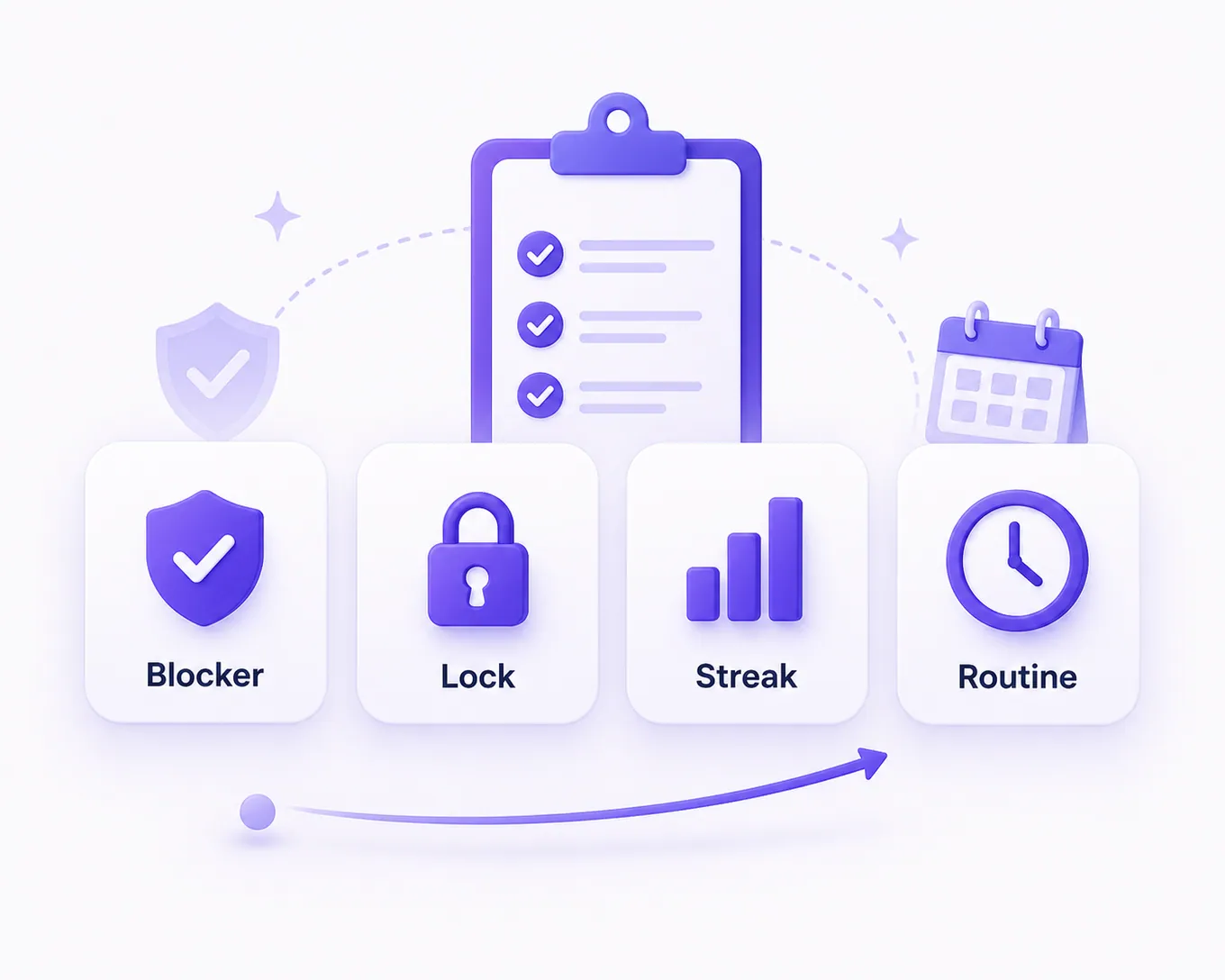
Make the method visible and shared. Track the length of your current gap so progress is a number you can see and protect. Tell one trusted person, or lean on a community like NoFap or the Appcognito Discord, and let a lock hold your block so willpower is not your only defence at midnight. Visible progress plus a second person is what carries you across the harder rungs.
Lock in the progress:
- Track your current gap length, not just clean or not.
- Restart the same day after a slip, and log its cue.
- Check in with one person, or a community, every week.
You are not chasing a perfect record. You are stretching one gap at a time until the gap is just how you live.
When to get help
If your use feels completely out of control, is tied to distressing thoughts, or is seriously harming your relationships, work or wellbeing, please reach out for proper support. Asking for help is a strength, not a failure. These are techniques used in professional recovery programs. For personal medical advice, talk to a doctor or therapist.
Related guides: why do people get addicted to porn, how to stop a porn addiction, how to block adult content on Android, or set up Appcognito's adult content and porn blocker and lock it behind a trusted person's code.
Frequently asked questions
Should I quit porn cold turkey or gradually?
Both can work, and there is no single right answer. A clean break gives a clear line in the sand, but for a habit built over years it often ends in a heavy relapse. A gradual, scheduled reduction, where you cut the frequency and then stretch the gap between sessions, is usually the version people actually finish. Pick the one you will stick to.
How do I reduce porn gradually without it dragging on forever?
Use a schedule and lengthening intervals instead of a vague 'less'. Cap your frequency below your current baseline, then chase a clean gap of 2 days, then 7, then 14, 30 and 60. Each interval has a deadline and a next target, so the plan keeps moving rather than drifting.
How long does it take to quit porn?
Think in months, not days. With a gradual plan the strongest urges usually ease within the first two to four weeks of a clean stretch, and by around 90 days staying free tends to feel like the new normal. Judge yourself by whether your gaps are getting longer, not by any single day.
What if I relapse during the taper?
A slip resets the current interval, not the whole journey. Note the cue that set it off, fix that one gap in your plan, and restart the same day. People who treat a lapse as information, not failure, recover far faster than people who spiral into 'I have ruined it'.
Does a blocker help if I am reducing gradually?
Yes. A blocker is not the whole fix, but it adds friction and removes the instant, private access behind most relapses, which is exactly what widens the gap between sessions. Appcognito blocks over 750,000 adult sites on-device and lets a trusted person hold the code, so you can tighten access as your streak grows.
Is stopping watching porn the same as quitting?
For most people, yes, it is the same goal: watch less and less until it is none. This guide is the practical way to get there, by reducing the frequency and then stretching the gap between sessions. If your use feels compulsive or fully out of control, our guide on how to stop a porn addiction adds the recovery layer on top: handling withdrawal, riding out urges and knowing when to get professional help.
Widen the gap with less willpower
Appcognito blocks over 750,000 adult sites on-device, adds the friction that protects a growing gap, and keeps a streak so you can see it stretch. Private by design, free to start.