



Intention mode does the pause, then holds
Pick the 3 apps you actually came for at every unlock. Not a breath before you open Instagram anyway, but a decision that closes the rest of the phone.
Giveaway Win 1 month of Appcognito Pro, free. Free entry, one per person. Enter now
one sec puts a breath between you and the app, then opens it anyway. Appcognito's Intention mode moves that decision to the unlock, where the problem actually starts, and puts a real blocker behind it.
one sec works on a real finding: put a few seconds of friction in front of an app and a meaningful share of openings simply do not happen. The impulse was never strong enough to survive a delay; it only ever needed the gap between the thought and the tap to be zero.
The question is where the friction belongs. one sec puts it in front of each app: you tap Instagram, you breathe, and then Instagram opens. That catches the impulse, but it accepts the premise. You are already in the mode where you open apps to see what is there.
Watch what actually happens on a phone and the failure is usually earlier. You pick it up without having decided anything. The unlock is the reflex; the app is just whatever your thumb finds. By the time a per-app pause fires, the aimless session has already begun, and you will breathe through it because breathing is not a decision, it is a delay.
Intention mode moves the friction up one level. Every time you unlock, you pick the three apps you actually came for. Those open. Nothing else does, until you lock the phone again. You are not asked to resist one app at a time. You are asked, once, what this unlock is for, which is a question an aimless unlock cannot answer.
Same job, done more privately and for far less. Here is where Appcognito pulls ahead.
Pick the 3 apps you actually came for at every unlock. Not a breath before you open Instagram anyway, but a decision that closes the rest of the phone.
one sec slows you down and then lets you through. Appcognito can slow you down, or refuse, or cut the app's internet so it opens to nothing.
one sec grew up on iPhone Shortcuts. Appcognito uses Android's own firewall, usage and overlay capabilities, which go considerably further.
one sec premium runs to roughly $40 a year. Appcognito is ₹2,499 / $39 once, for life, with a free plan that never expires.
Every row is something Appcognito does today, checked against one sec's own Android information.
| Feature | Appcognito |  one sec one sec |
|---|---|---|
| What it blocks | ||
| Apps | ✓ | ? |
| Websites | ✓ | – |
| Words on screen | ✓ | – |
| An app's internet, not the app | ✓ | – |
| Built-in adult site list | ✓ | ✓ |
| AI that spots off-topic screens | ✓ | – |
| Built-in gambling site list | ✓ | – |
| How it pushes back | ||
| Hard block | ✓ | ? |
| Mute notifications | ✓ | – |
| Dim the app | ✓ | – |
| Slow its internet | ✓ | – |
| Pause before unlocking | ✓ | ½ |
| Pick apps at every unlock | ✓ | – |
| Timed unlocks | ✓ | ½ |
| Strict mode | $ | ? |
| Whole-phone screen breaks | ✓ | – |
| What switches it on | ||
| Focus sessions | ✓ | ? |
| Weekly schedules | ✓ | ? |
| Specific dates | ✓ | – |
| Daily time limits | ✓ | ½ |
| Open-count limits | ✓ | – |
| Location | ✓ | – |
| Wi-Fi network | ✓ | – |
| Bluetooth device | ✓ | – |
| Charging or battery level | ✓ | – |
| Movement | ✓ | – |
| Calendar events | ✓ | – |
| NFC tag or QR code | $ | – |
| Home-screen widget | $ | ? |
| Keeping you honest | ||
| PIN or fingerprint lock | $ | – |
| A partner holds the code | $ | – |
| Uninstall protection | $ | – |
| Progress | ||
| Streaks | ✓ | – |
| Usage report | ✓ | $ |
| Daily habits | ✓ | – |
| Privacy | ||
| No account needed | ✓ | ✓ |
| Block lists stay on your phone | ✓ | ✓ |
| Price for a year of the paid plan | ||
| Paid plan | $14₹699 | $19.99 |
| Pay once, keep it for life | $39₹2,499 | $99.99 |
Based on each product's own public Android information: its website, help pages, pricing and Play listing. Competitor prices are in US dollars; "~" means the price came from a recent review because it is not published. Features and prices change, so check before you buy. Last reviewed 5 to 8 October 2026. Product names and logos are trademarks of their respective owners, used here only to identify each product.
one sec is built on a genuinely good insight, and there is published research behind it: adding a few seconds of friction before an app opens measurably reduces how often people follow through. The breathing animation is well made, the interruption feels calm rather than nagging, and for mindless opening it is often all someone needs. If a small pause is enough for you, it is a lovely app and you do not need a blocker at all.
The mechanics matter, so here is exactly what happens:
Two things fall out of this that a per-app pause cannot reproduce. First, the cost of an aimless unlock is now visible: standing at a picker with nothing you actually wanted is an uncomfortable, clarifying moment, and people report simply locking the phone again. Second, there is no per-app war of attrition. You are not negotiating with yourself eleven separate times a day.
Favourites are worth mentioning because they are commonly misread: pinning an app puts it at the top of the picker for convenience. It does not pre-select it and it does not exempt it. You still have to choose.
Here is where the two tools genuinely diverge. one sec's entire mechanism is delay, and delay has a hard limit: it only works on someone who has not decided. Against a deliberate, wide-awake, 11pm decision to scroll, a breathing animation is a formality.
Appcognito keeps the friction and adds the thing behind it:
Because Appcognito is a full blocker underneath, the pause is one feature among many rather than the whole product:
On setup: one sec on iPhone leans on Shortcuts automations you wire up per app, which is fiddly and breaks when you install something new. Appcognito is a native Android app, so you tick apps in a list, and there is a setting to auto-block anything you install from now on.
No export file, no account to migrate. It takes about five minutes.

No account and no Shortcuts to wire up. It works out of the box.

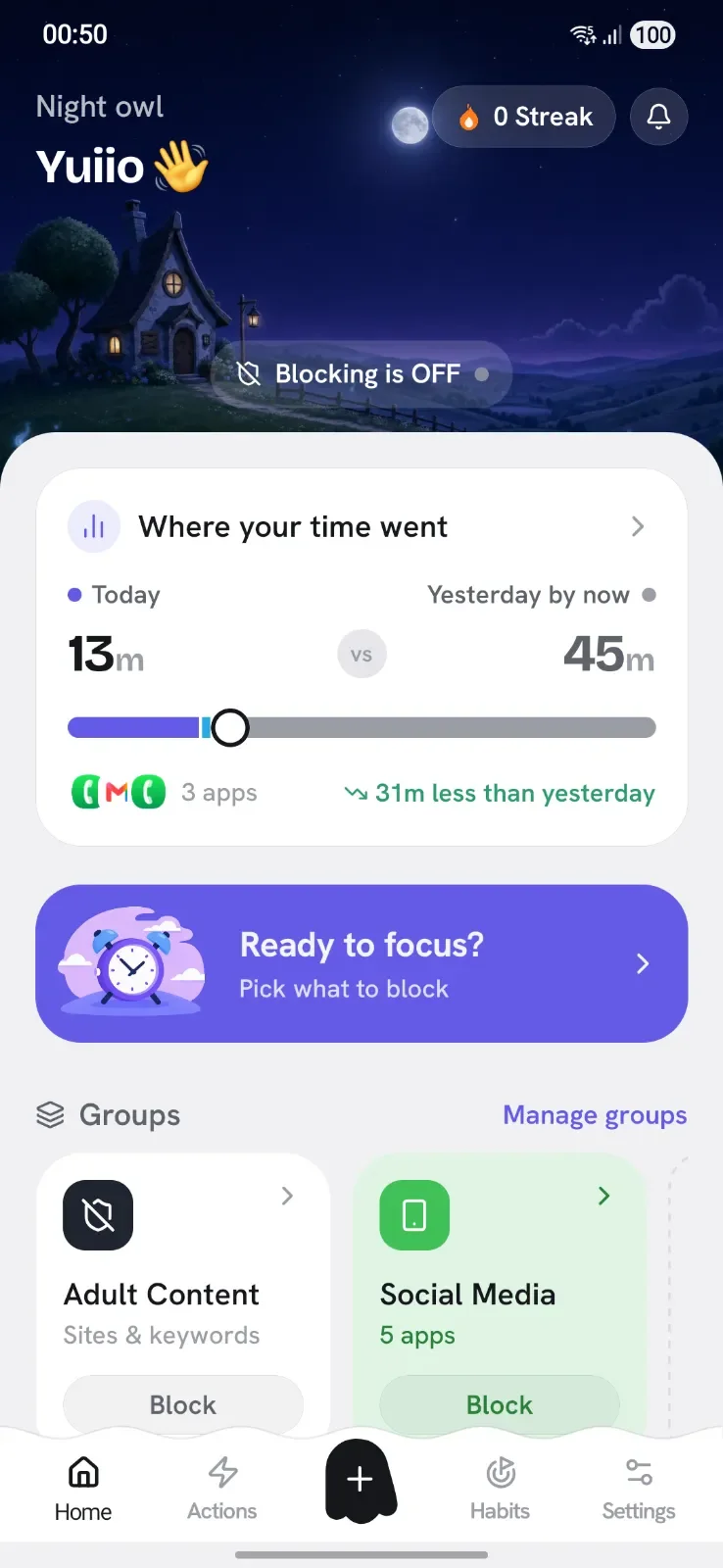
This is the feature you came for. Settings, Blocking, Intention mode. Every unlock now asks which three apps you actually want.
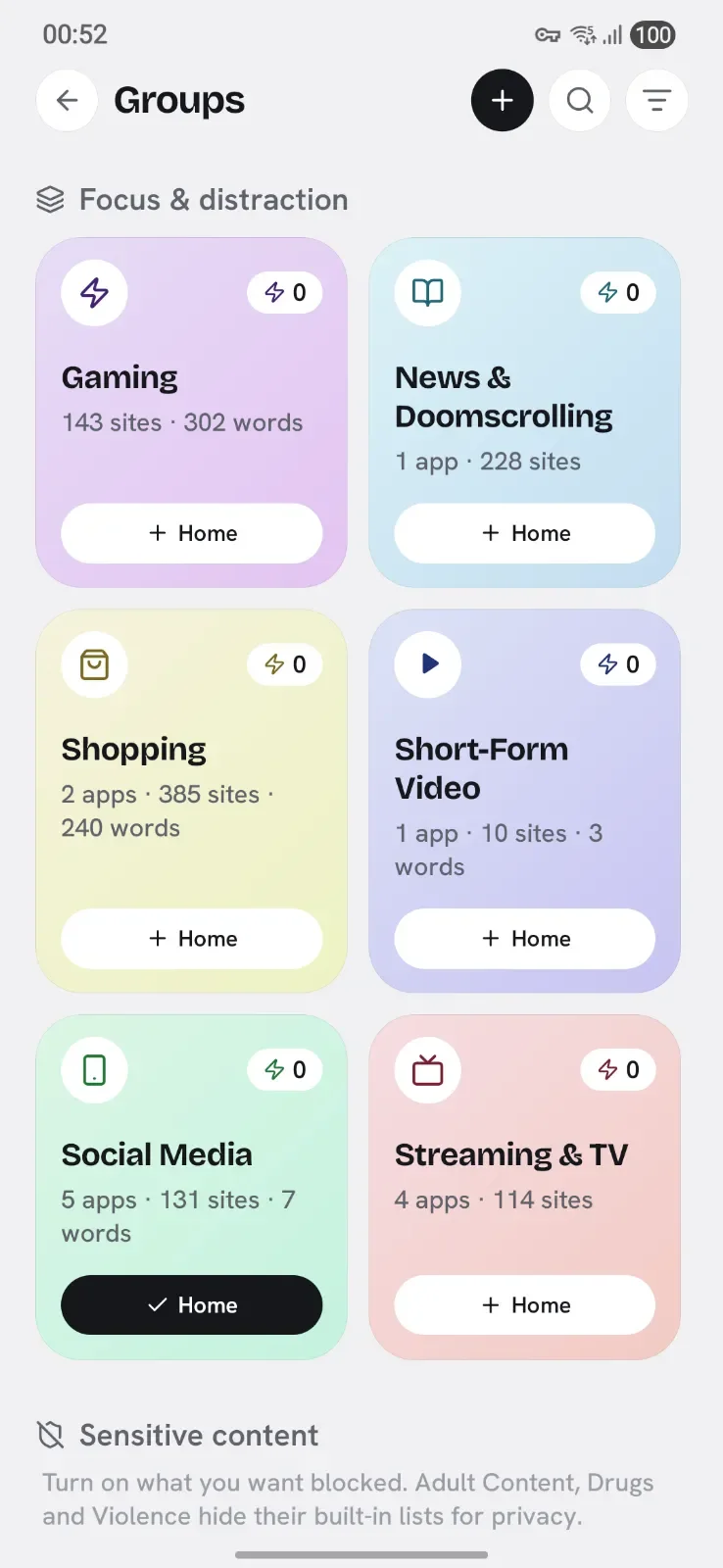

Intention mode handles the aimless unlock. A block list handles the apps that should not be an option at all.
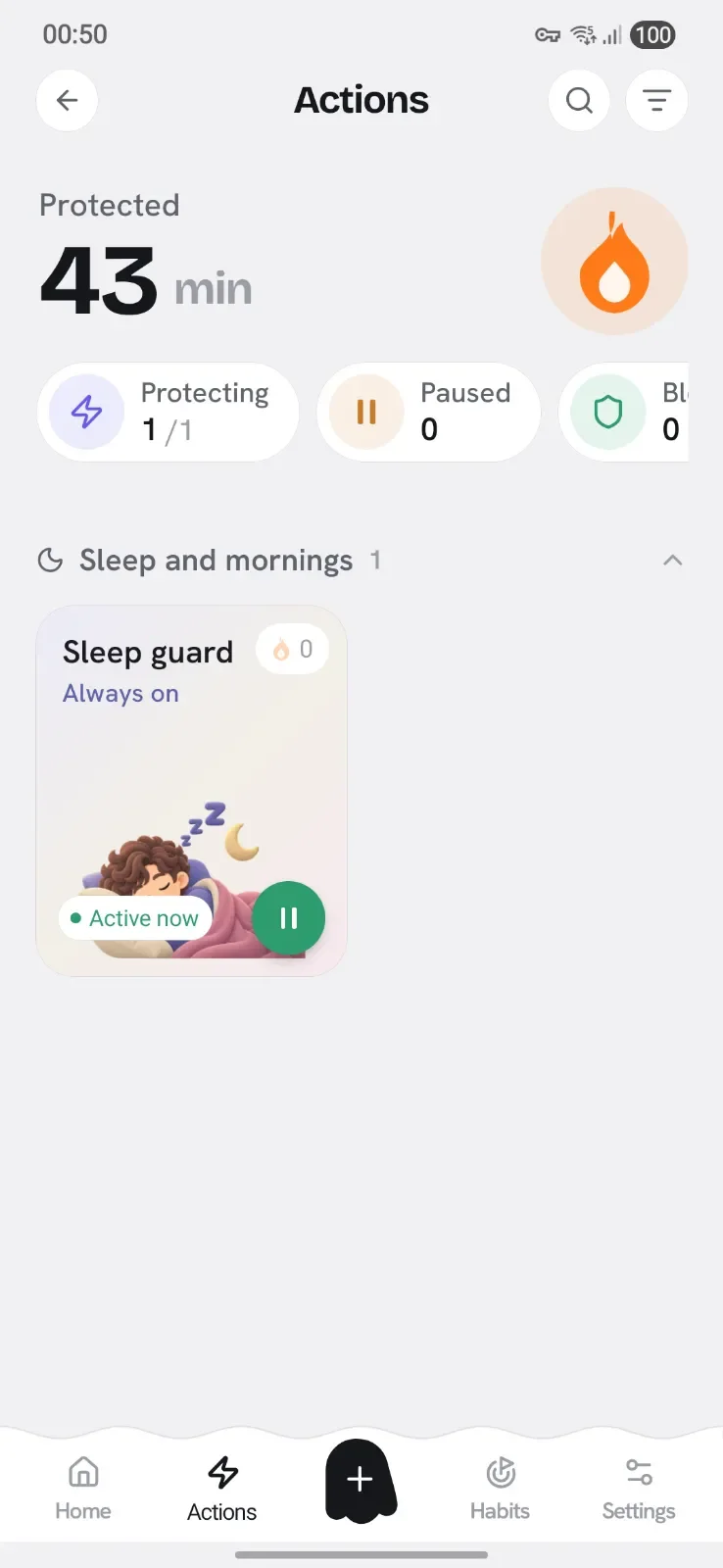

A mini-game or a 30 second breather before blocking can be switched off. The one sec pause, applied to the escape hatch instead of the app.

Has a pause ever been enough for you?
If yes, stay with one sec. If a breath genuinely stops you and you close the phone, you do not need a blocker, and adding one would be building a wall where a sign was working. It is a well-made app doing a well-evidenced thing.
If you have breathed and opened it anyway, that is the signal. Friction fails against intent, and no amount of extra seconds fixes that. You need something that does not depend on how you feel in the moment: Intention mode for the aimless unlock, a real block for the apps that should not be an option, and Strict mode for the nights you would rather it were.
Most people run both ideas at once, which Appcognito supports directly: Intention mode at the unlock, a block list for the never-open apps, and the Unblock Gate keeping the escape hatch slightly out of reach.
Related: Forest is the other motivation-first app people compare, Opal if you want coaching and scores, and why people disable their own blockers, which is the research this all rests on.
Appcognito. Its Intention mode covers the same psychological ground as one sec's pause, but goes a step further: instead of a breath before each app, you choose the three apps you actually came for at every unlock, and nothing else opens until you lock the phone again. Behind that sits a real blocker, so apps you never want are not merely delayed.
one sec interrupts you per app: you tap Instagram, you breathe, and then Instagram opens. It reduces how often you follow through, which research suggests genuinely works. Intention mode moves the decision up a level, to the unlock itself. You state what you came for once, and the rest of the phone stays shut for that session. The difference matters because the aimless unlock is usually the problem, not the specific app.
Not really, and it is not meant to. one sec's mechanism is friction: a deep breath, a short delay, a prompt asking whether you meant to do this. If you wait it out, the app opens. That is by design and it works well for mindless opening. It does not help with a deliberate, wanted, 11pm decision to scroll, which is what a block is for.
Yes, that is the point of combining them. Intention mode handles the unconscious unlock. Block lists and rules shut out the apps and sites you never want open. Strict mode makes those blocks unbreakable for their term. The Unblock Gate then applies one sec-style friction to the off switch itself, which is the place friction does the most good.
No. On iPhone, one sec relies on Shortcuts automations that you configure per app. Appcognito is an Android app using Android's own capabilities, so you pick apps from a list and it works. No per-app wiring and nothing to rebuild when you install something new; there is even a setting to auto-block every app you install from now on.
Yes, with no time limit and no ads. Intention mode, Quick Block, Focus, Rules, Block lists and Habits all work free, with all 16 triggers and all 11 built-in block lists. Free runs one block list and one rule at a time. Pro lifts that and adds Strict mode, accountability locks, uninstall protection and unlimited challenges, and there is a 7 day Pro trial that needs no card.
Weighing up more than one? Here is the honest version for each.
Cloud accounts and a yearly price several times higher
Ads in a focus app, and limits behind a subscription
Desktop only, so your phone stays wide open
Built for iPhone first, at a premium subscription price
A timer that rewards you, but never actually blocks

Free forever. Pro is $1.99 a month, $14 a year, or $39 once₹99 a month, ₹699 a year, or ₹2,499 once.
Swap wins, ask for help on a hard night, and tell us what to build next.
Be first to know when Appcognito hits Google Play. No spam, no account, ever.
You are on the list. We will email you the moment Appcognito lands on Google Play. No spam, ever.